Copyright © Michael Price Inc.
Website Links:
http://pigmentworkshops.blogspot.com
http://www.artist-info.com/artist/Michael-Price
http://www.amberalchemy.com
http://www.artincontext.org
http://www.kremer-pigmente.de
http://www.kremerpigments.com
http://saatchi-gallery.co.uk
http://www.artanddesignonline.com
http://fineartamerica.com
http://www.myartspace.com
http://www.artmesh.org
http://www.heasookrhee.com
http:// artegory.com
www.walterwickisergallery.com
Email: artmprice@gmail.com
The Figurative Art of Michael Price
Tempera and Oil Paintings with Natural and Mineral Pigments
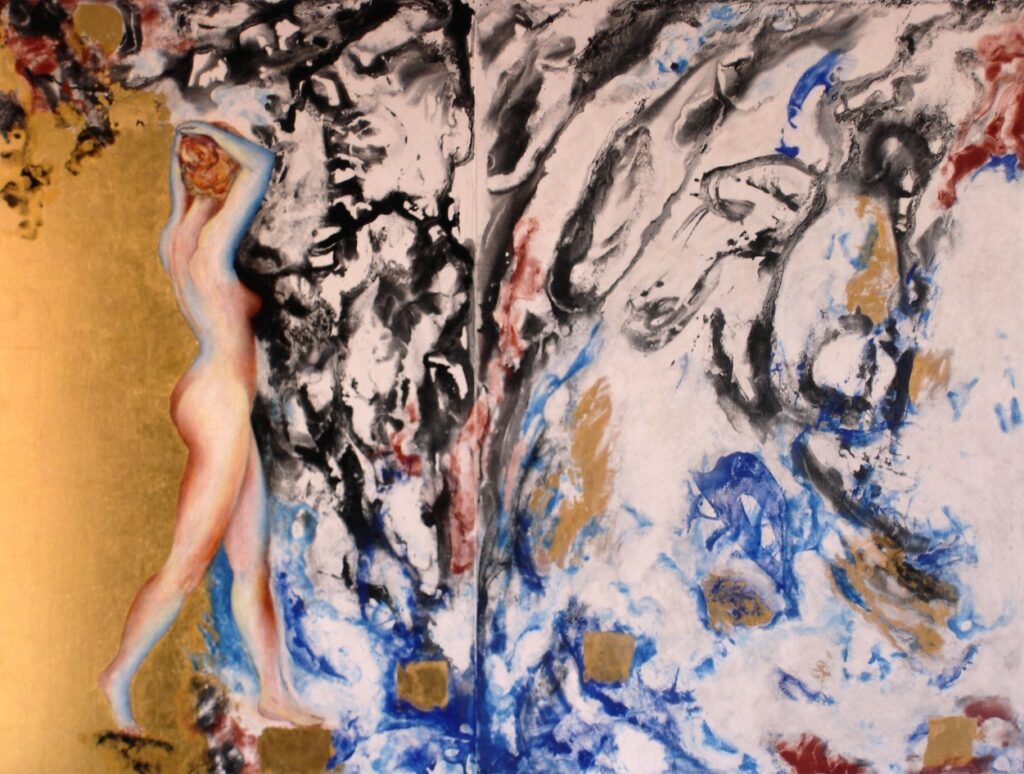
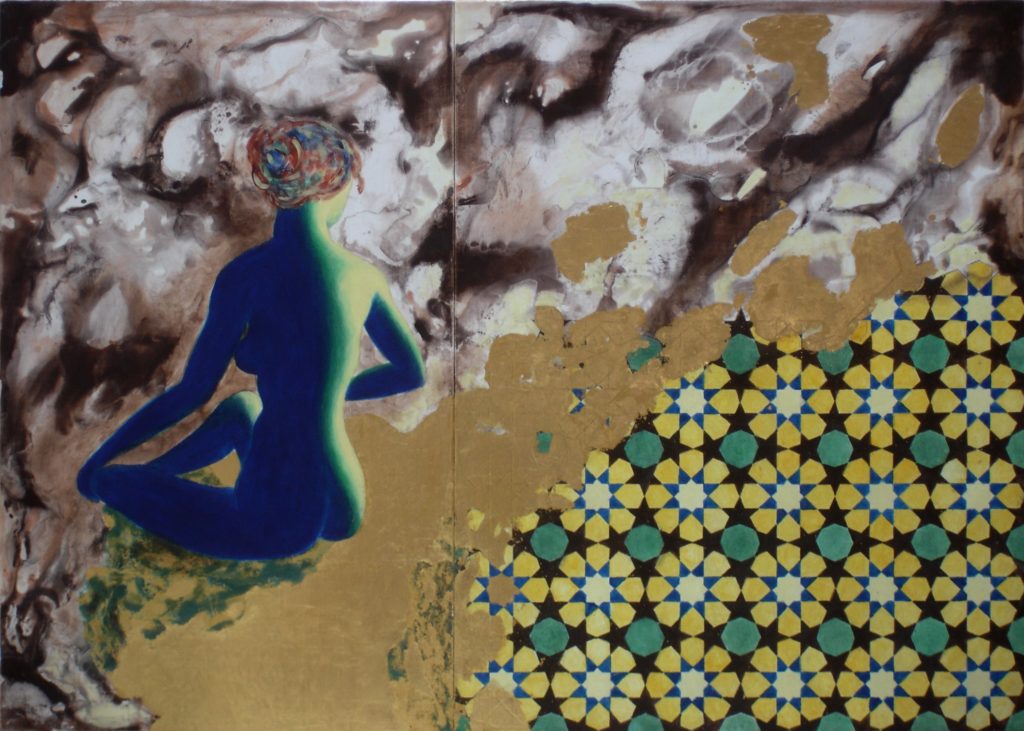
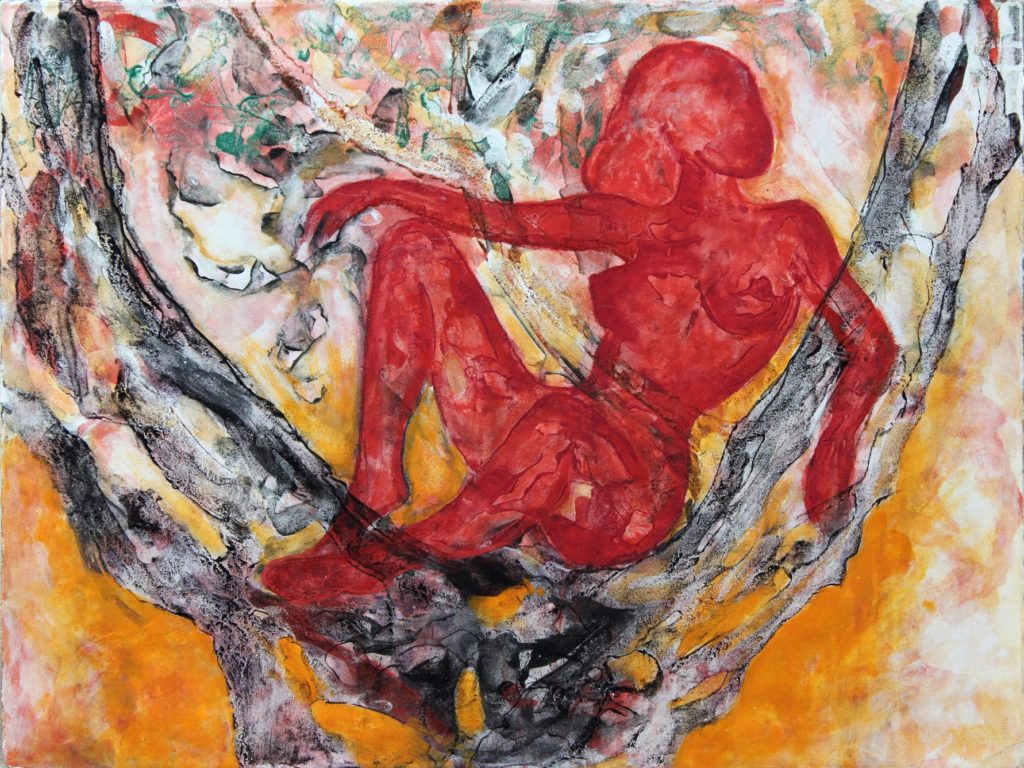
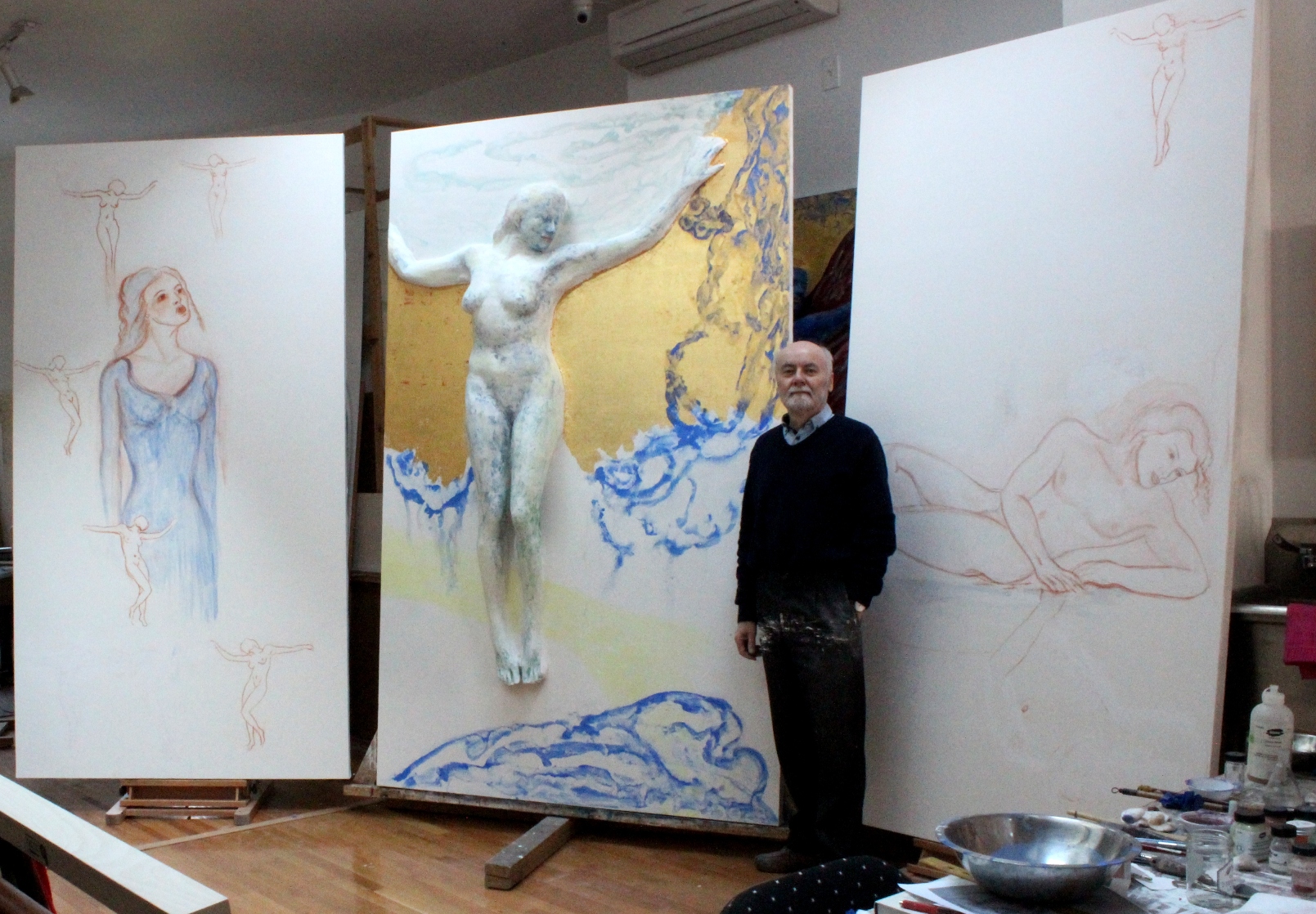
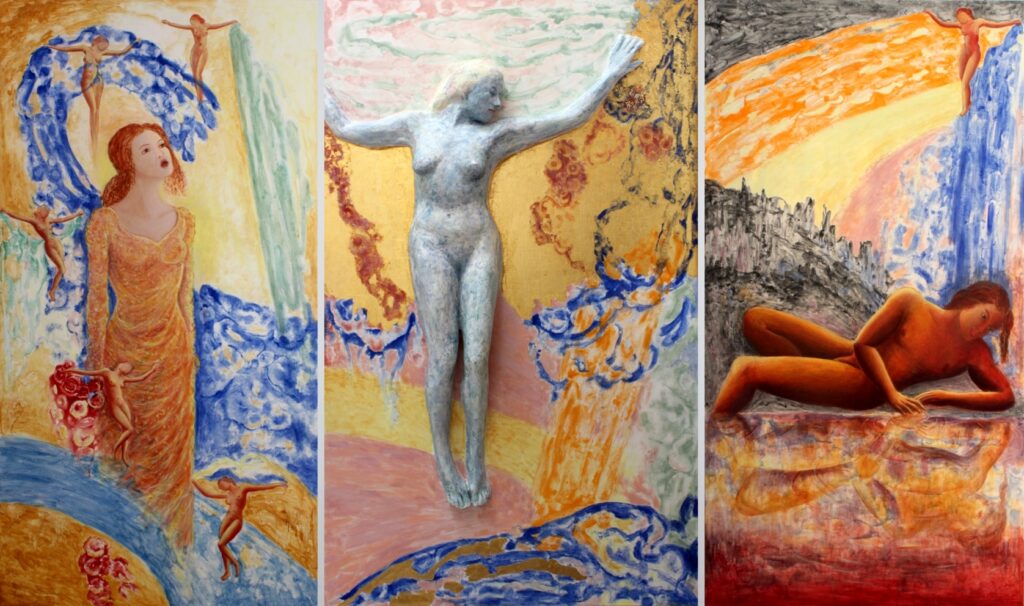
Chromatic Sequence No. 8, The Ground of Being
Two panels: 154 x 268.5 cm / 60.6 x  105.7 ins.
Artist's Statement: The Polychromatic Nude

Introduction
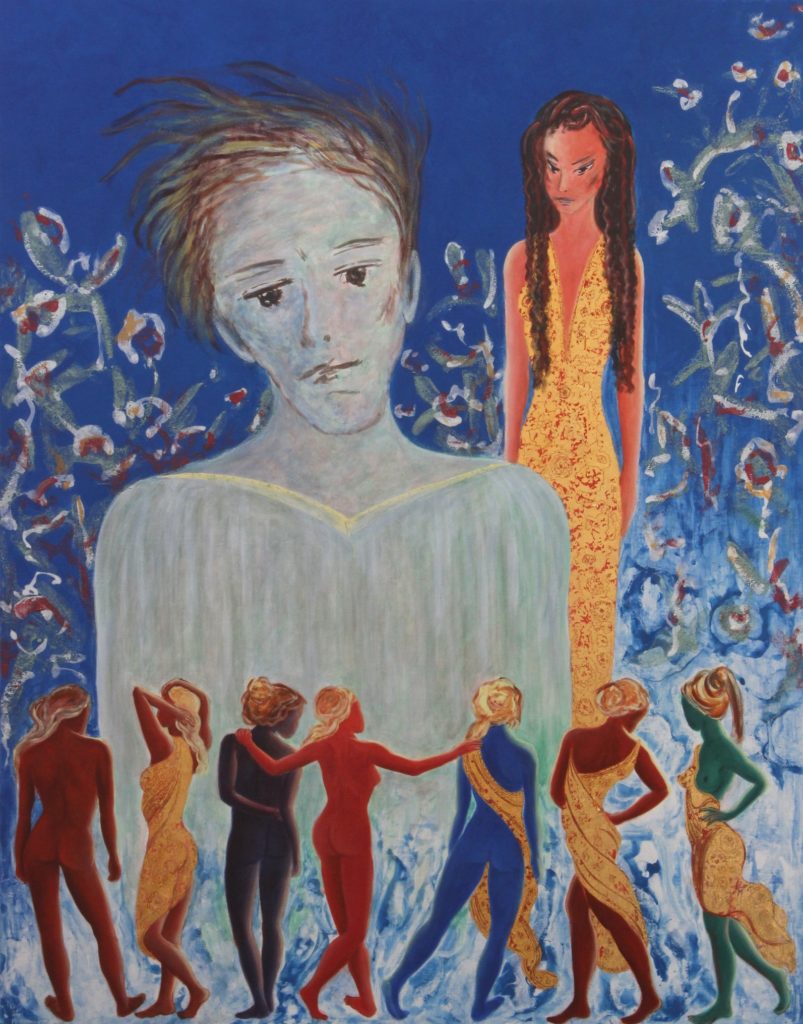
Throughout history, the nude, whether male or
female, when expressed as a unity of imagination and
perception, invariably exhibits a dignity which far
removes it from social concepts of nakedness. With
each age, the nude whether in painting or sculpture
has undergone its own transformation becoming
modified and redefined in the process. My personal
development and redefinition of the nude focuses on
the “perception” that our corporeality is an extension
of a transcendent reality. This relationship between
body, spirit and soul has been a theological
preponderant for almost two thousand years.
The Real and the Imaginary
C. G. Jung wrote in ‘Mysterium Coniunctionis’ (vol.
14 of his collected writings): “The existence of a
transcendental reality is indeed evident in itself, but
is uncommonly difficult for our consciousness to
construct intellectual models which would give a
graphic description of the reality we have
perceived”.  The nudes from my dynamic ephemeral
figures of the 1980’s to the polychromatic nudes of
the last decade attest to this basic precept that the
archetypal world inside ourselves is just as real - or
imaginary - as the physical world we inhabit.
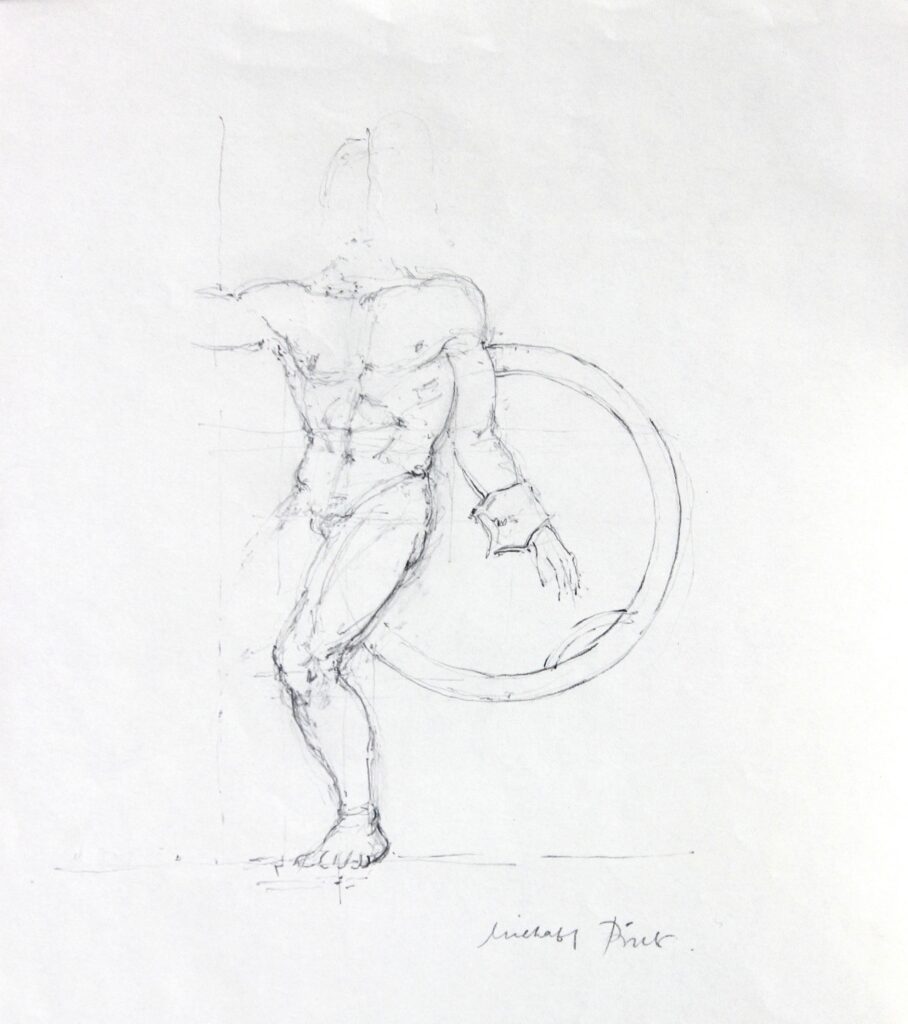
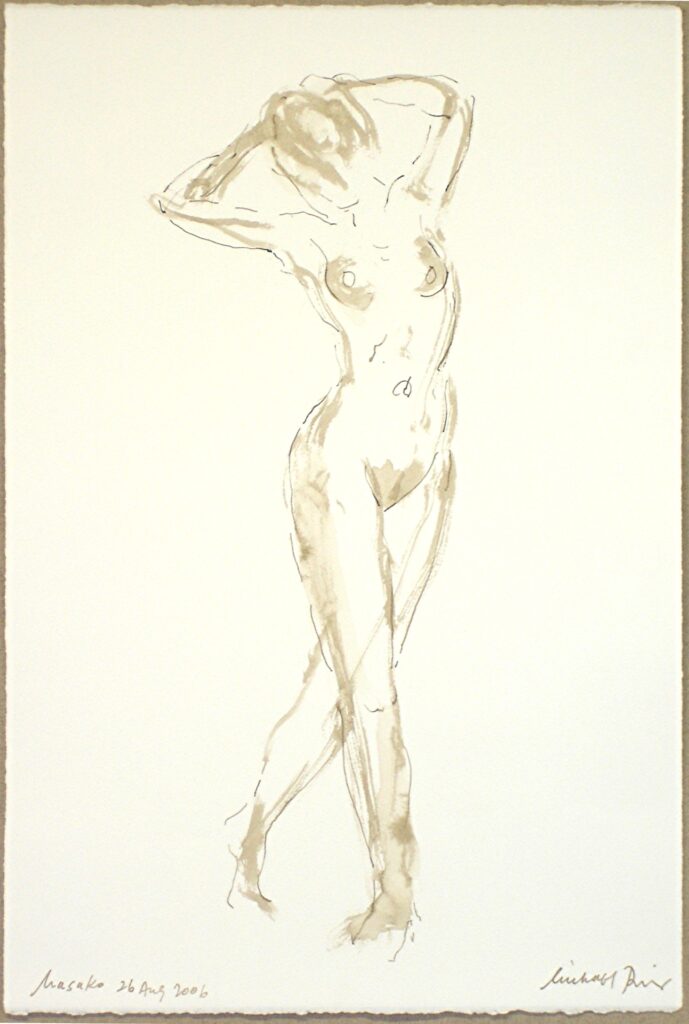
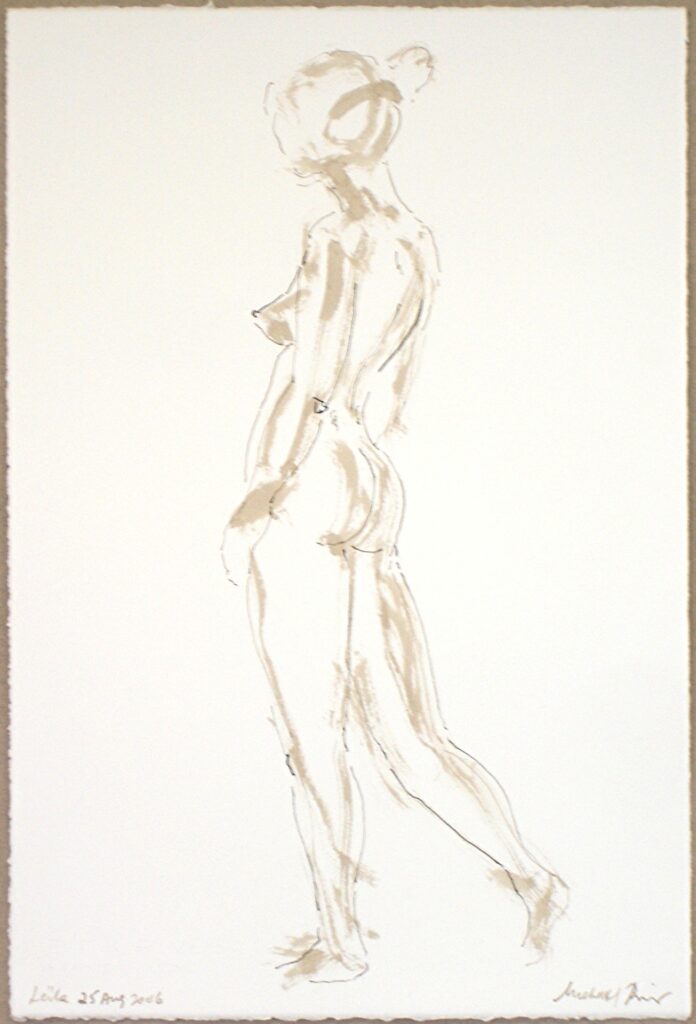
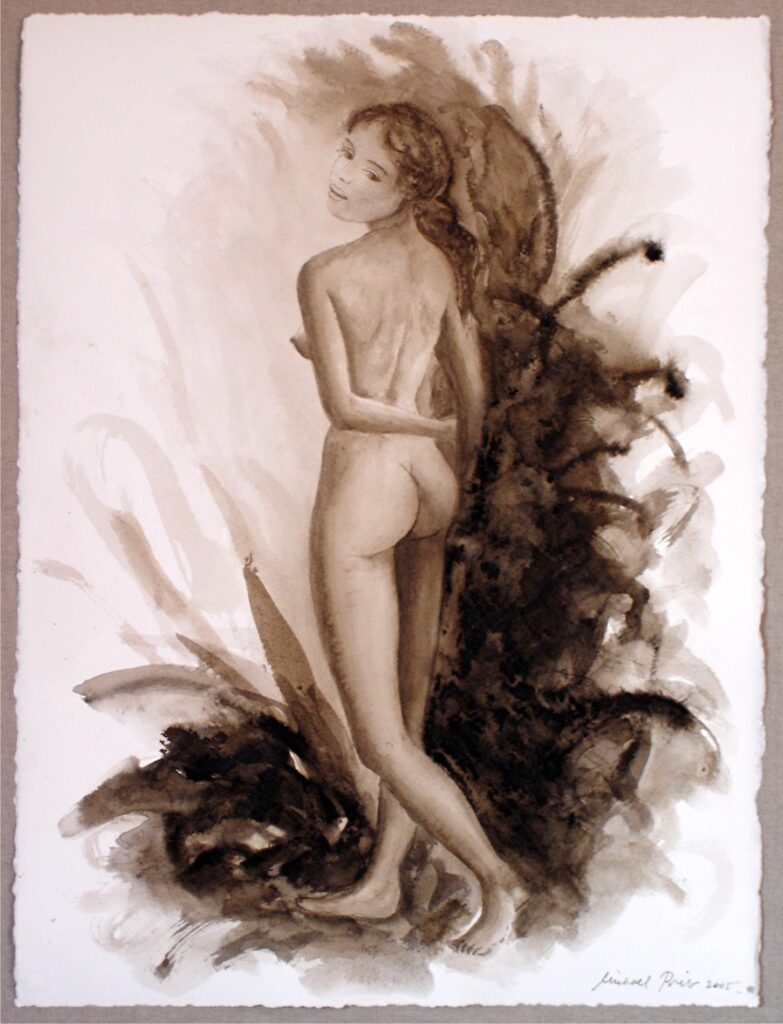
The Drawings
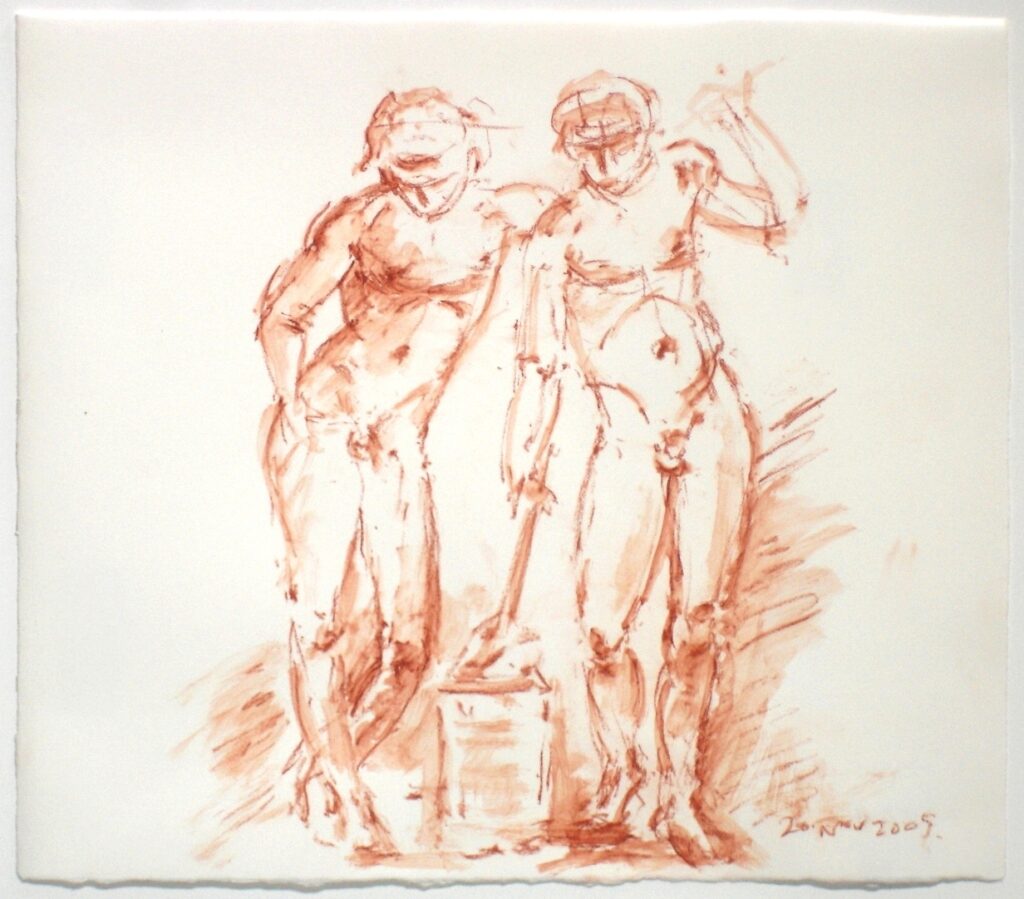
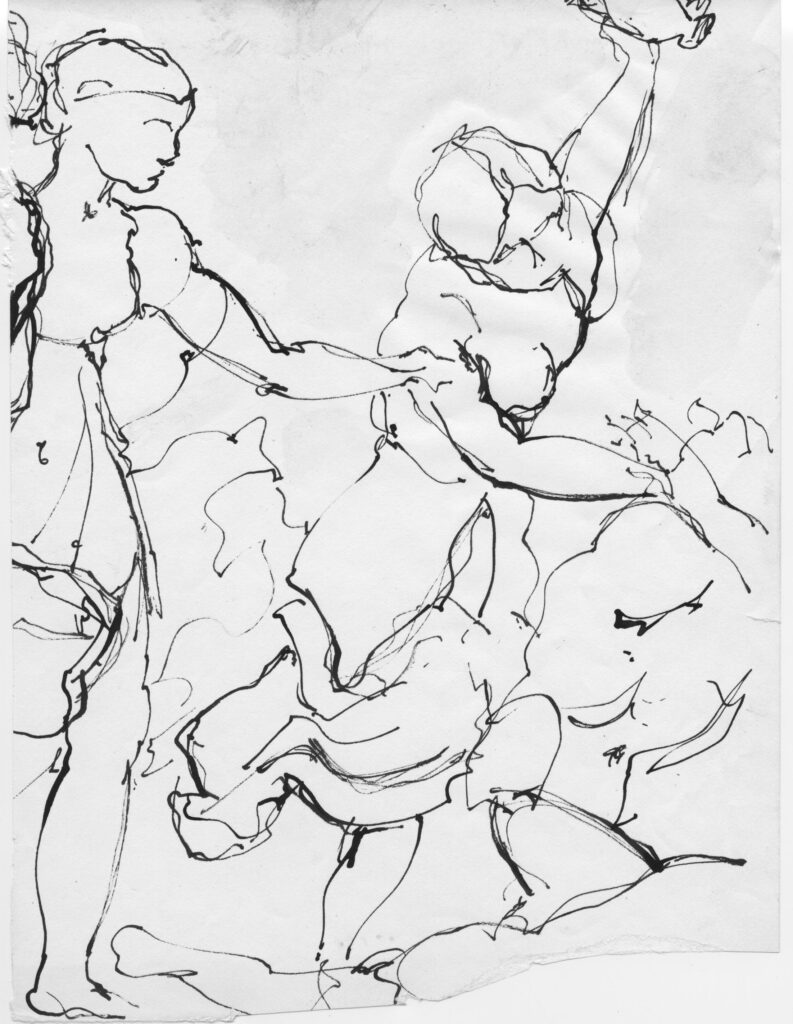
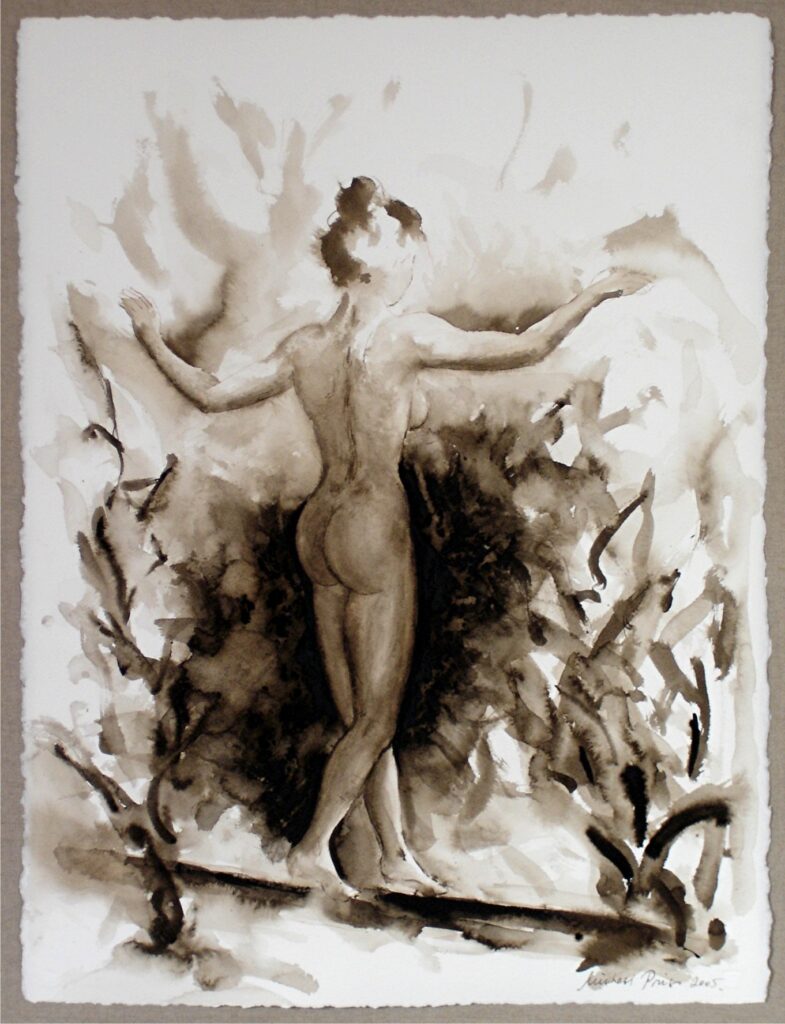
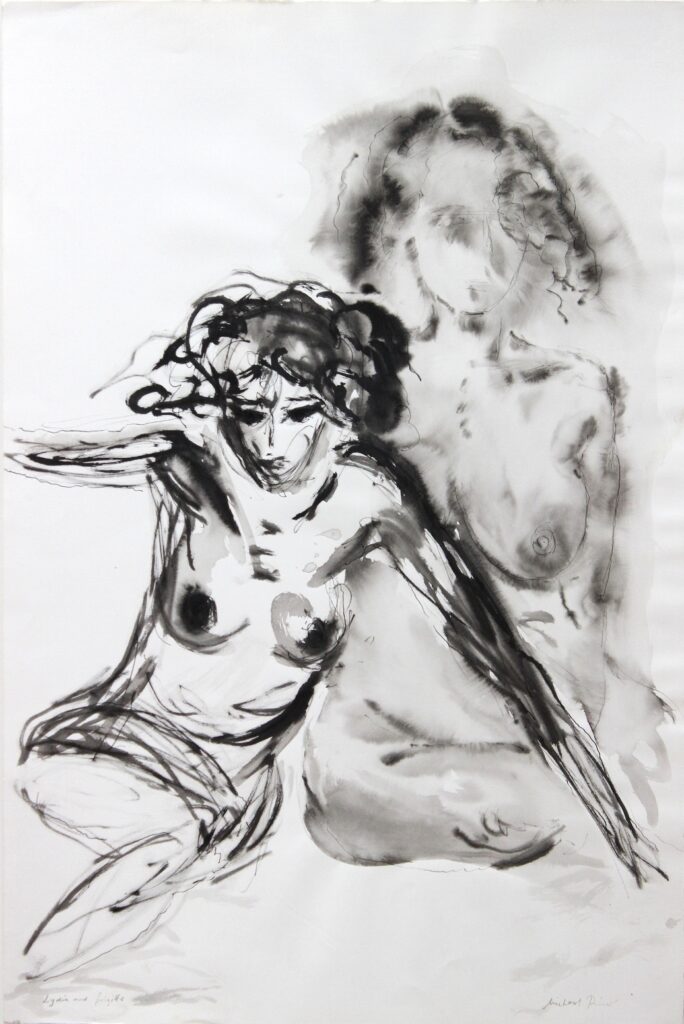
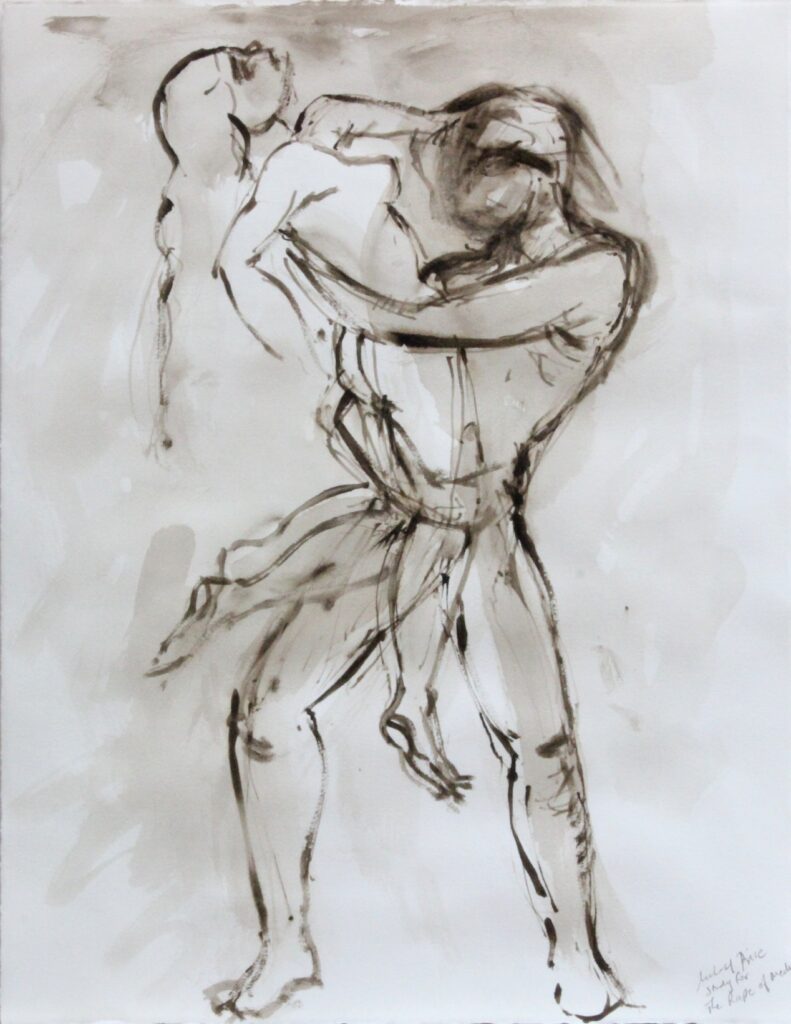
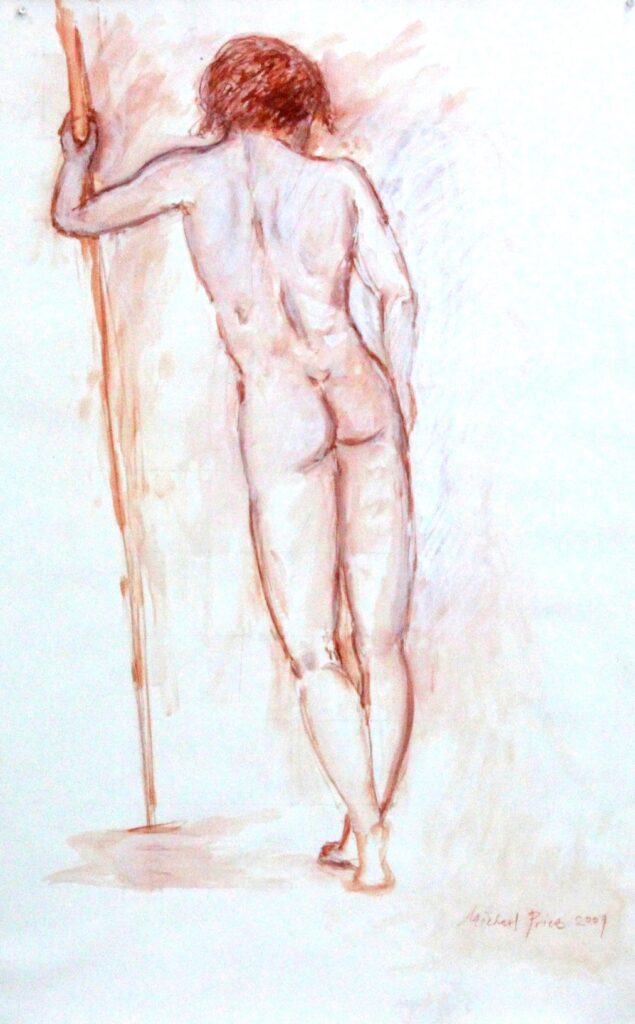
Drawing from the live model plays a central role in
my working process. The work with each model
explores that individual's kinaesthetic awareness
through undirected and spontaneous movement. Each
drawing session thus becomes a minimalist theater of
the imagination. The drawings are quickly executed
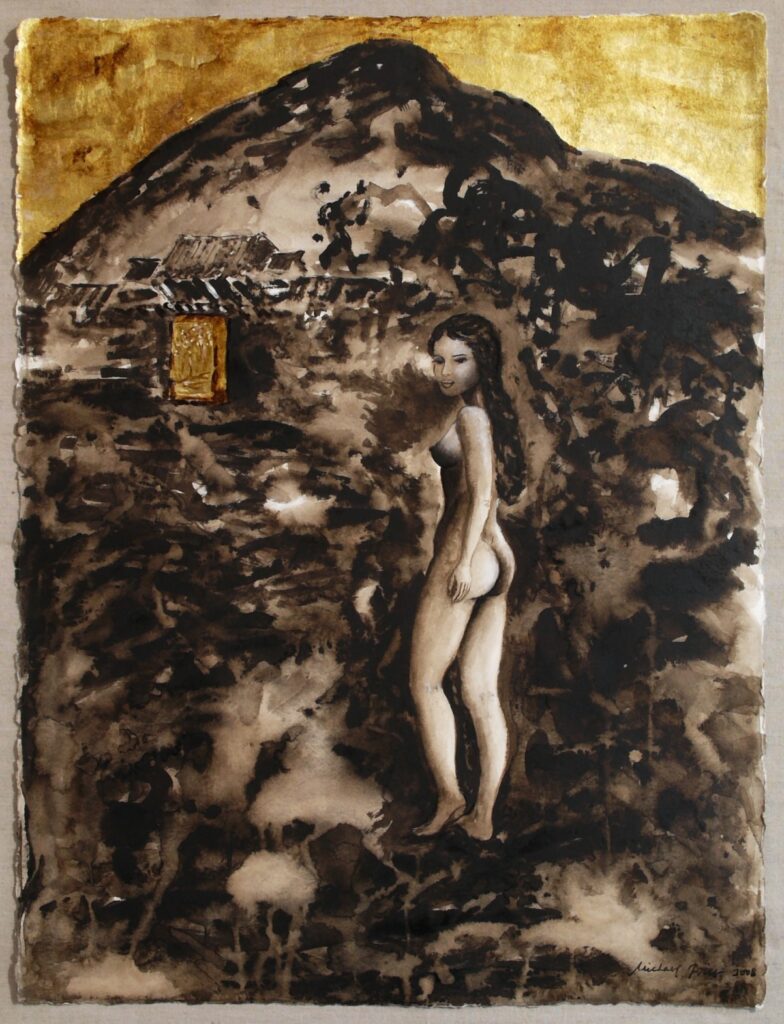
using bamboo pens, bistre or Chinese ink and wash on
paper. The life drawings as well as the study of
ancient Greek sculptures essentially inform the
paintings in order to explore the parameters of the
nude as an archetype.
The Paintings
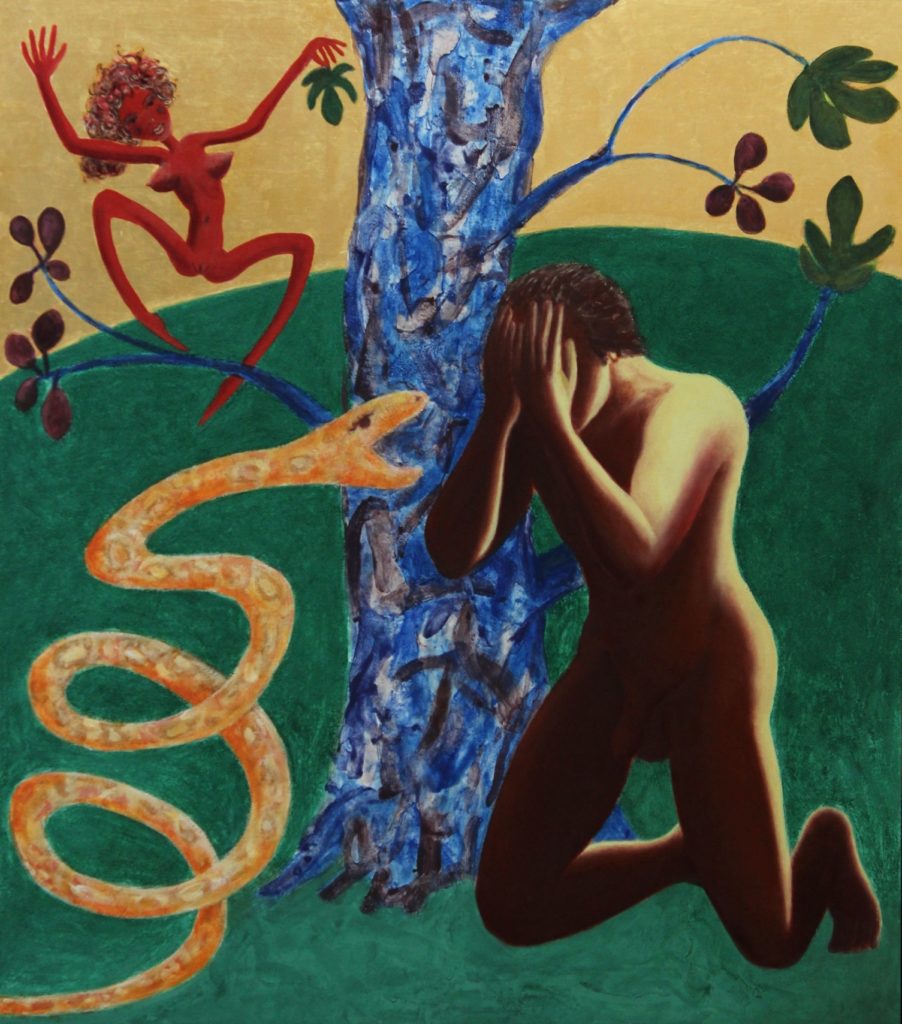
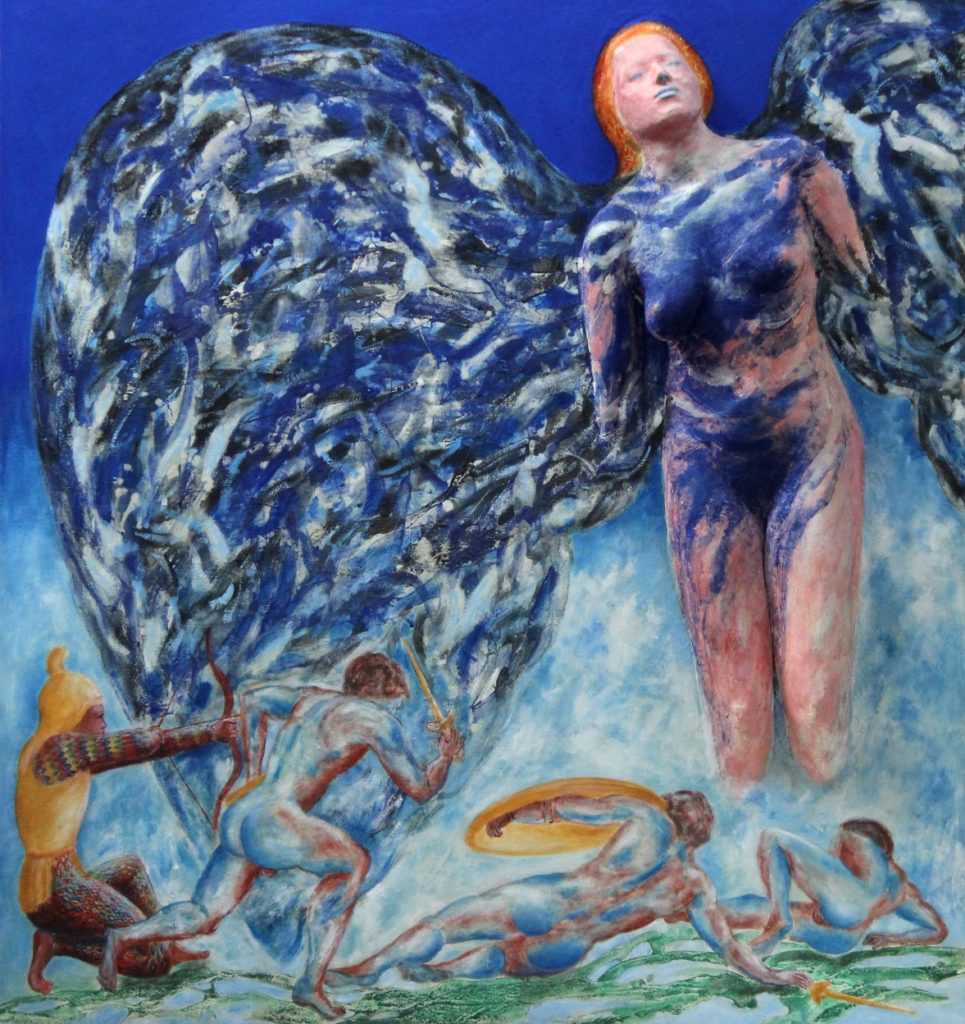
The archetype is not a thing in itself, but an
experience. I therefore view my work with the
figure over the past 30 years and the polychromatic
nudes since the early 1990’s not as a representation of
the phenomenal world, but as an autonomous
numinous experience. Whether the figure grows out
of the picture plane as a two dimensional illusion, or a
three dimensional relief, the inner dynamic and aura
of the figure creates the necessity for a
counterbalance within the picture plane. My response
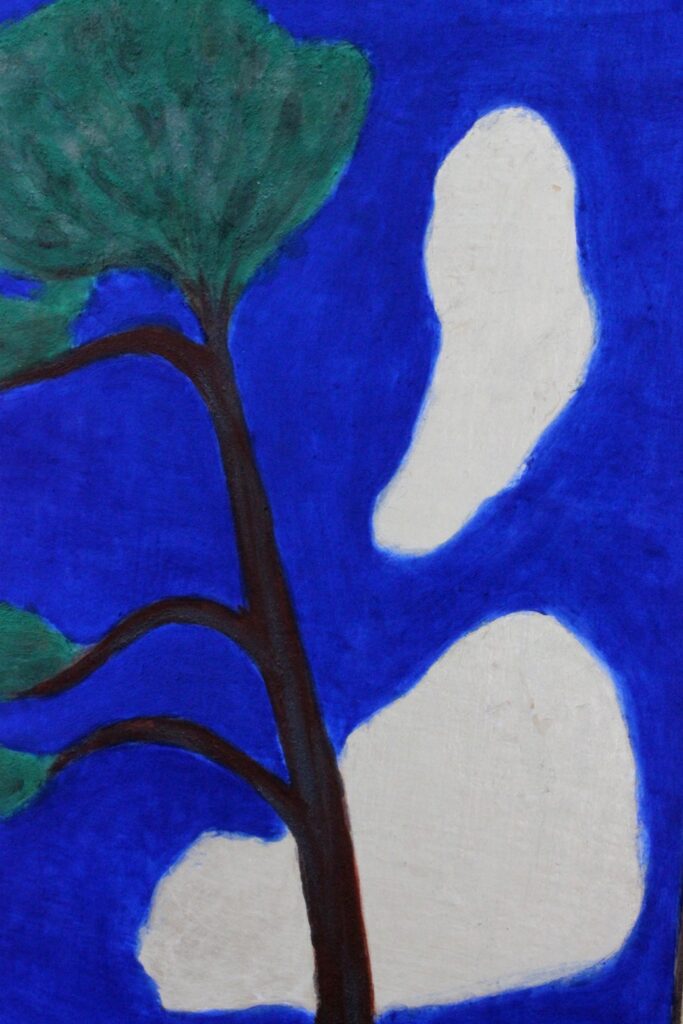
is a colour-field or colour-space which I term a
‘chromatic space’. This allows the picture plane to be
liberated from the role of a figure-ground or ground-
figure juxtaposition, as in traditional figurative
painting. This counterbalance becomes an active
abstract component of equal value with the figure.
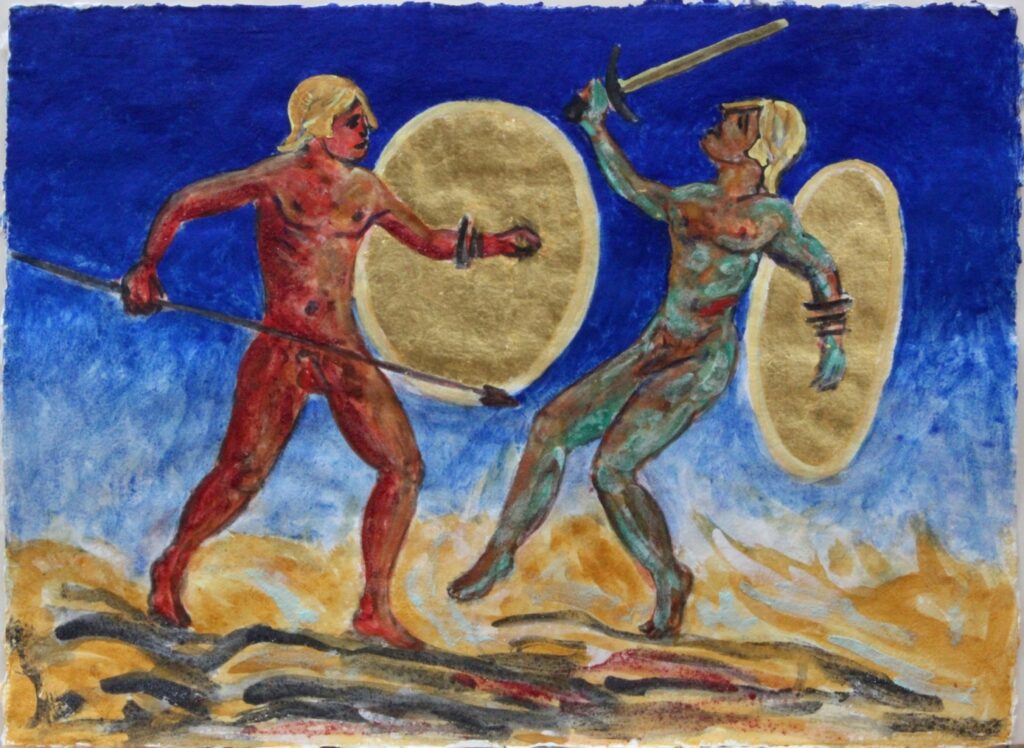
Thus the figure itself becomes polychromatic and in
its turn becomes free from being represented with
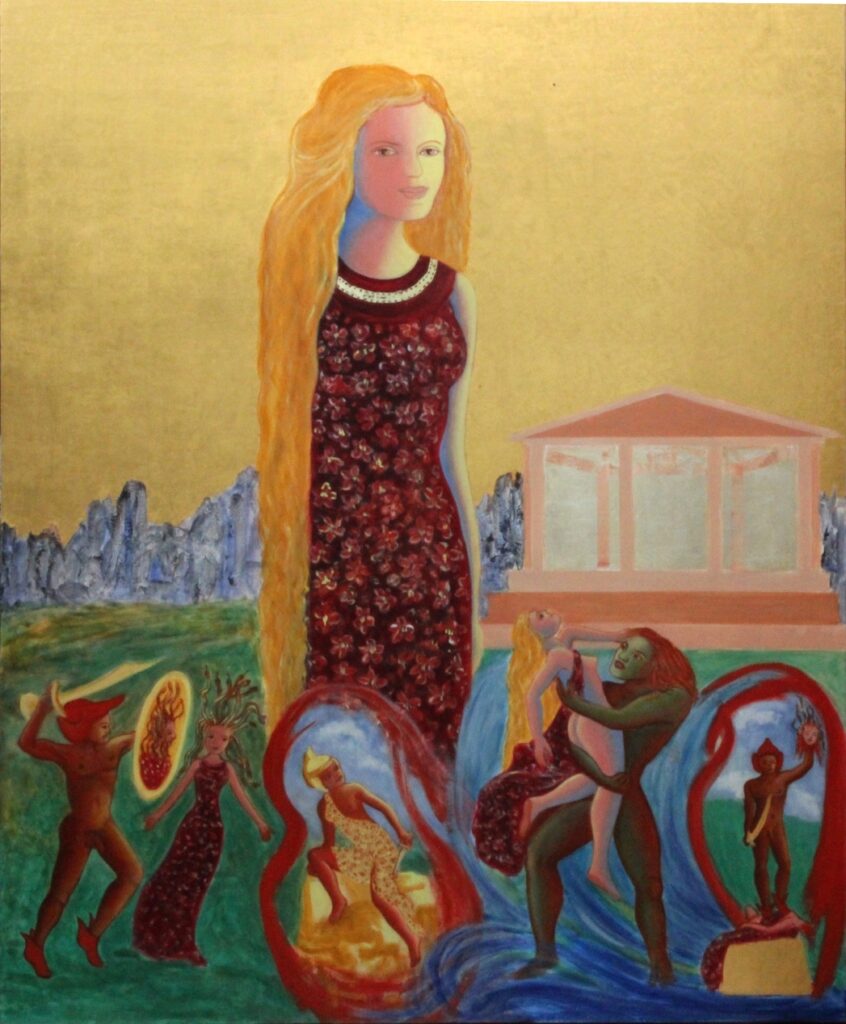
skin-like colours and tones. The use of gold-leaf in
recent works is in the traditional role of late
European medieval and early Renaissance painting in
which the alchemical purification of the human spirit
is elevated or transmuted from base material into
gold (either literally or metaphorically according to
the individual’s perception of reality). In my work,
gold-leaf functions as an integral spiritual and visual
component of the work rather than being burdened
with any specific religious associations.

The gateway to this world, both physically and
spiritually, is through the use of natural colour, i.e.
colour prepared from rocks and crystals. The inner
dynamic of the nude generates a colour field or space.
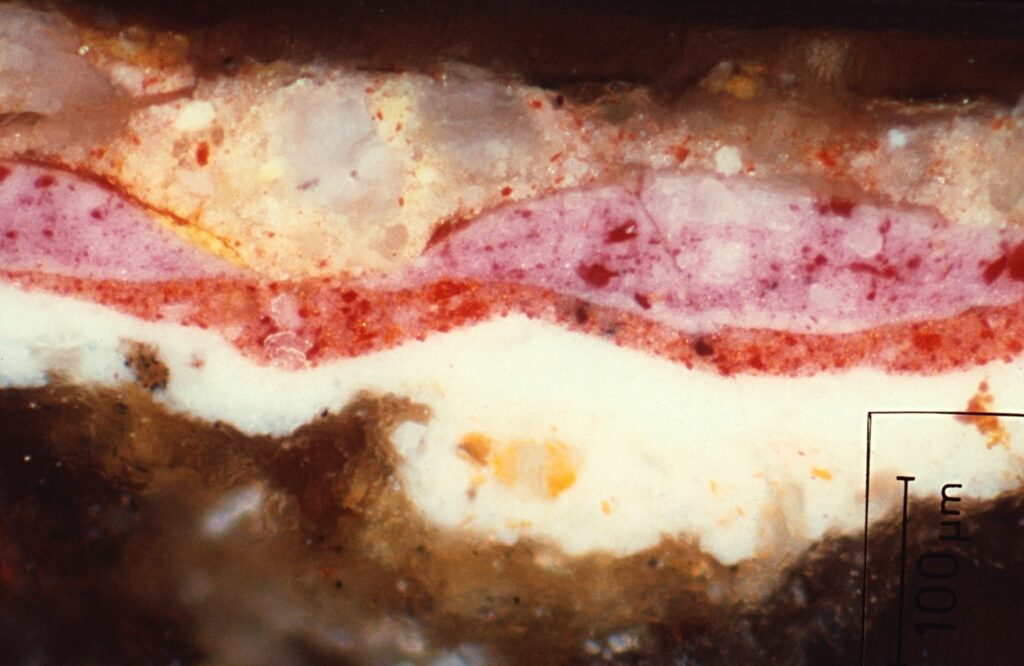
This “chromatic space” is created by controlling the
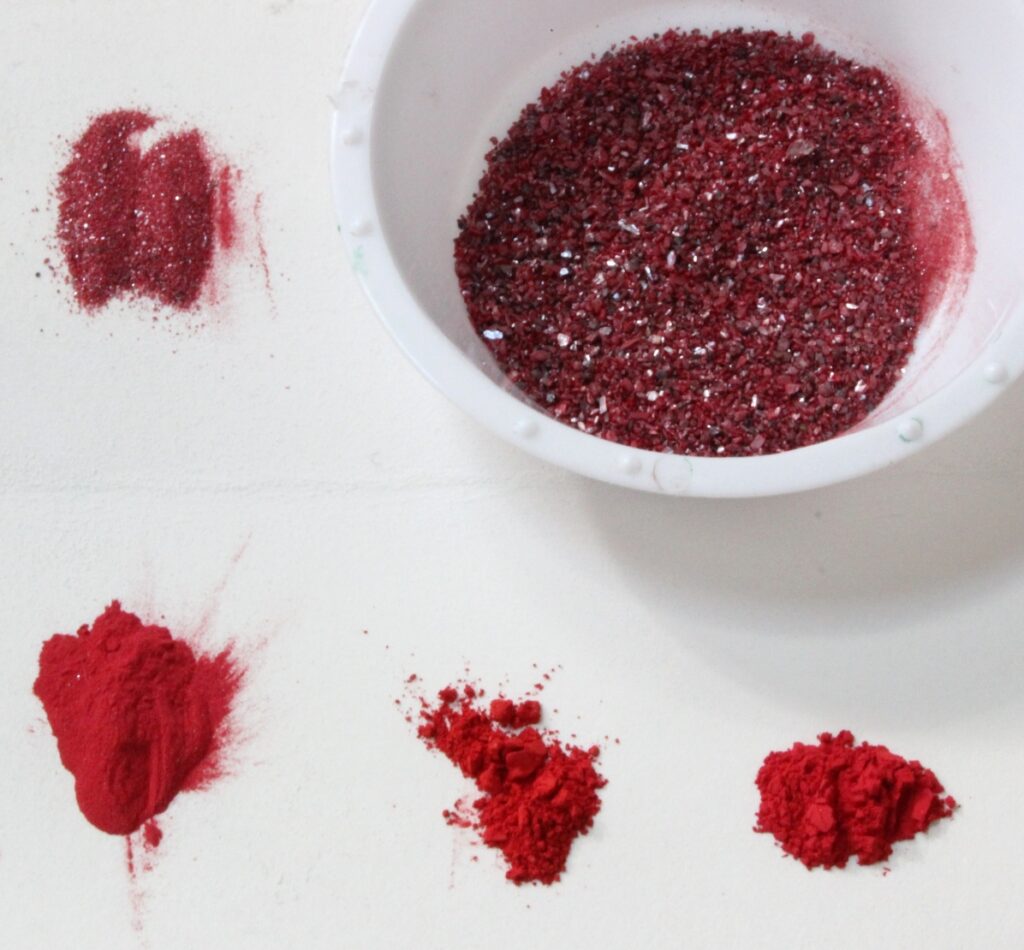
pigment particle size (literally the chroma) of the
crystals and rocks I use to make pigment.
The Pigments
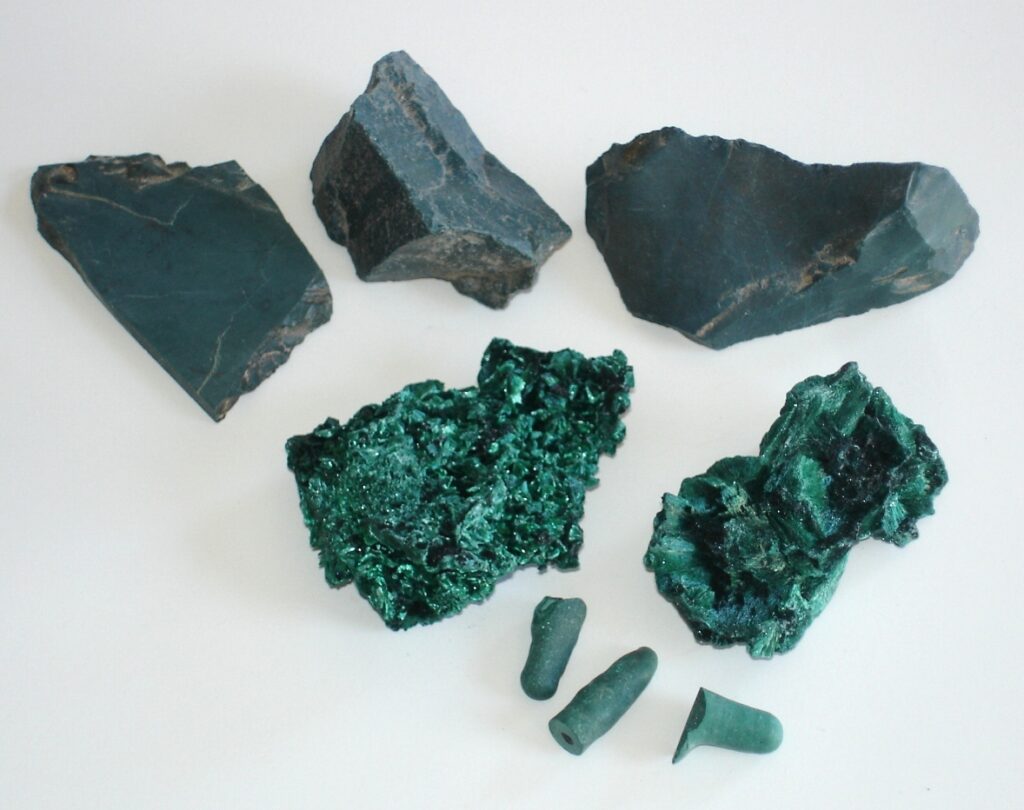
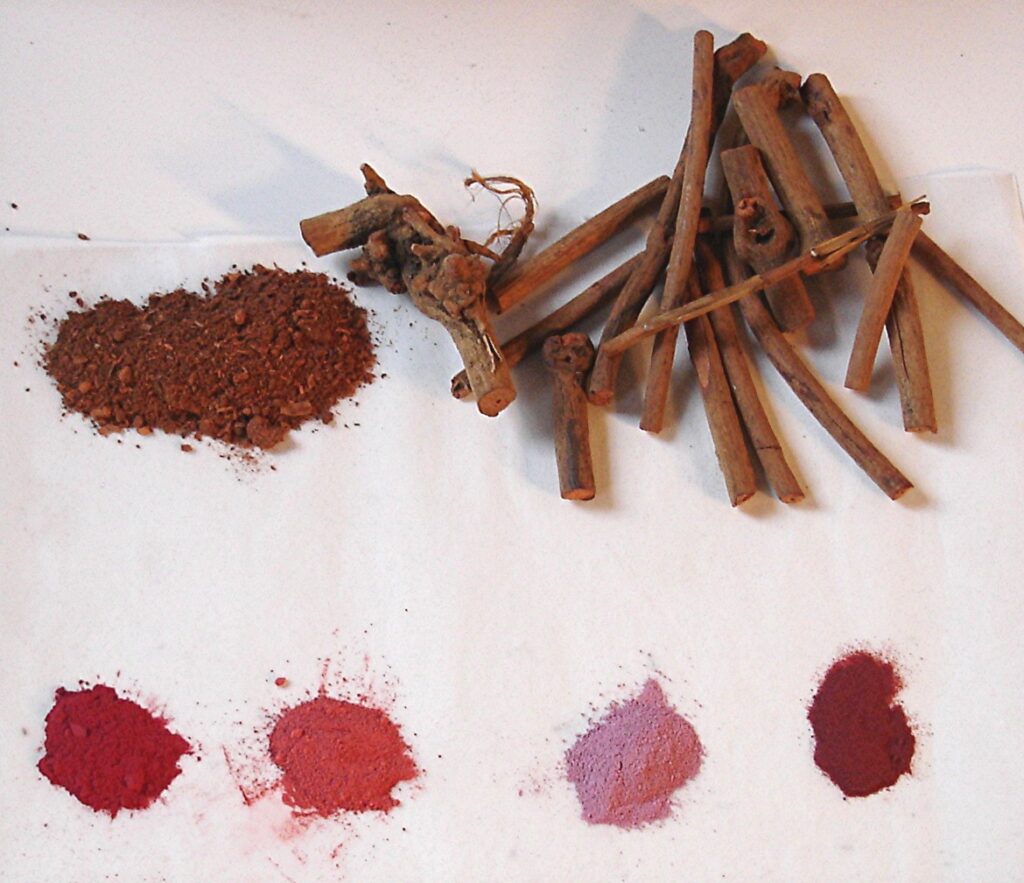
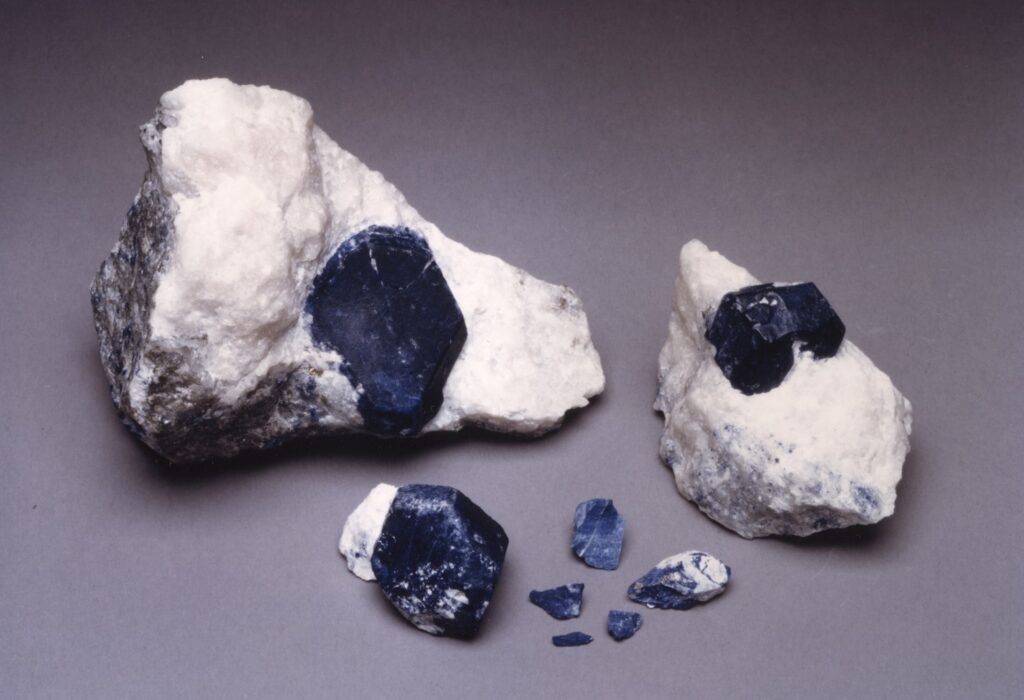
The natural and mineral pigments I use produce a
very different palette of colour and luminosity
compared to modern synthetic pigments whether as
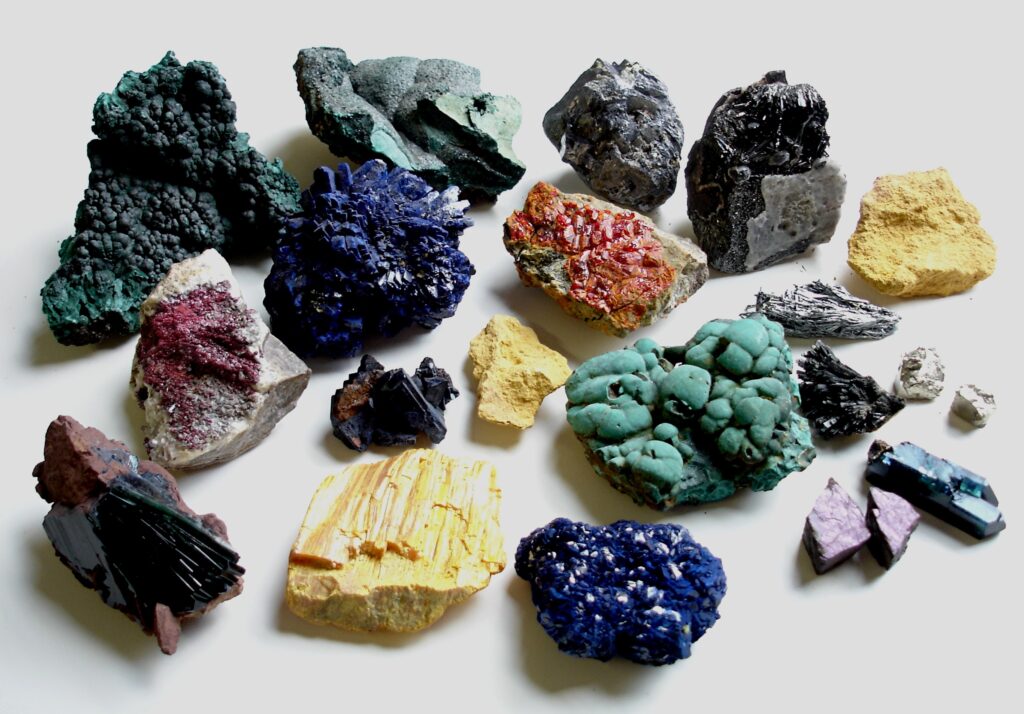
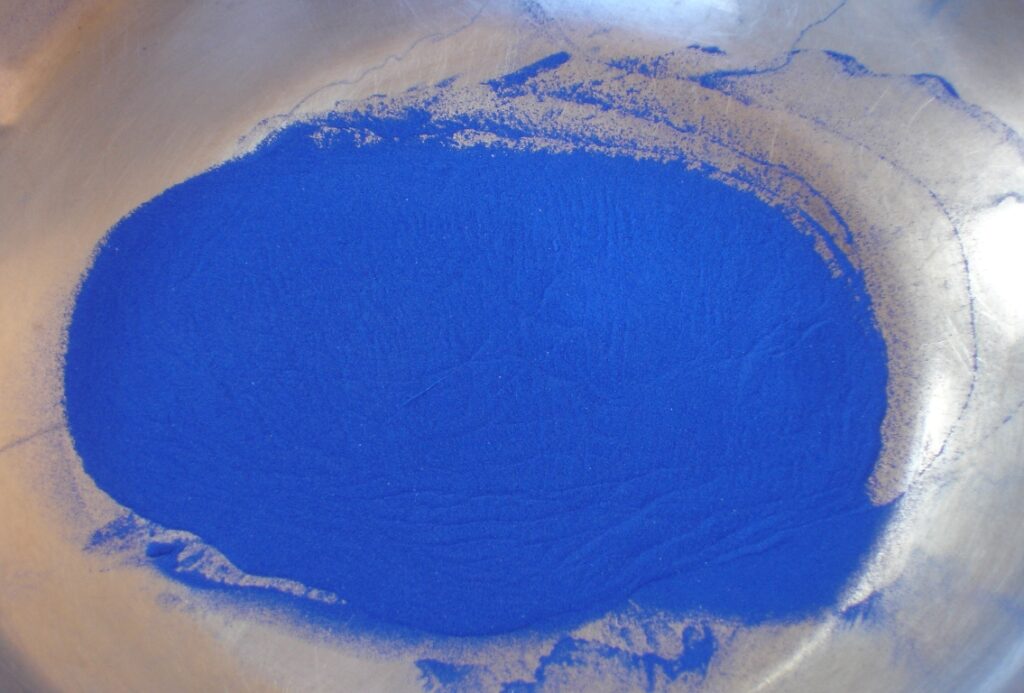
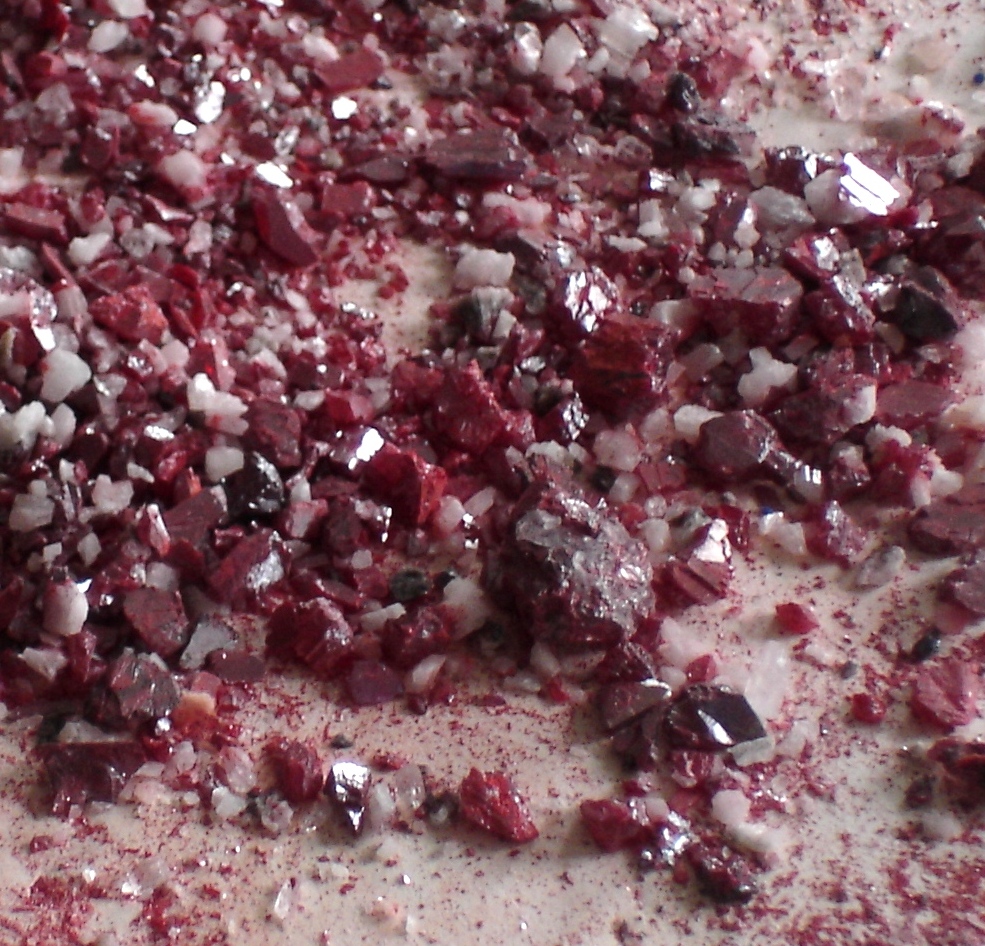
oil or tempera paint. The pigments include lapis
lazuli, azurite, malachite, cinnabar, orpiment,
realgar, vivianite, purpurite, red and green jaspers,
stibnite, pyrolusite, cerussite, galena, calcite, quartz
and Japanese oyster-shell white (Gofun). Other
natural pigments include natural indigo, the root
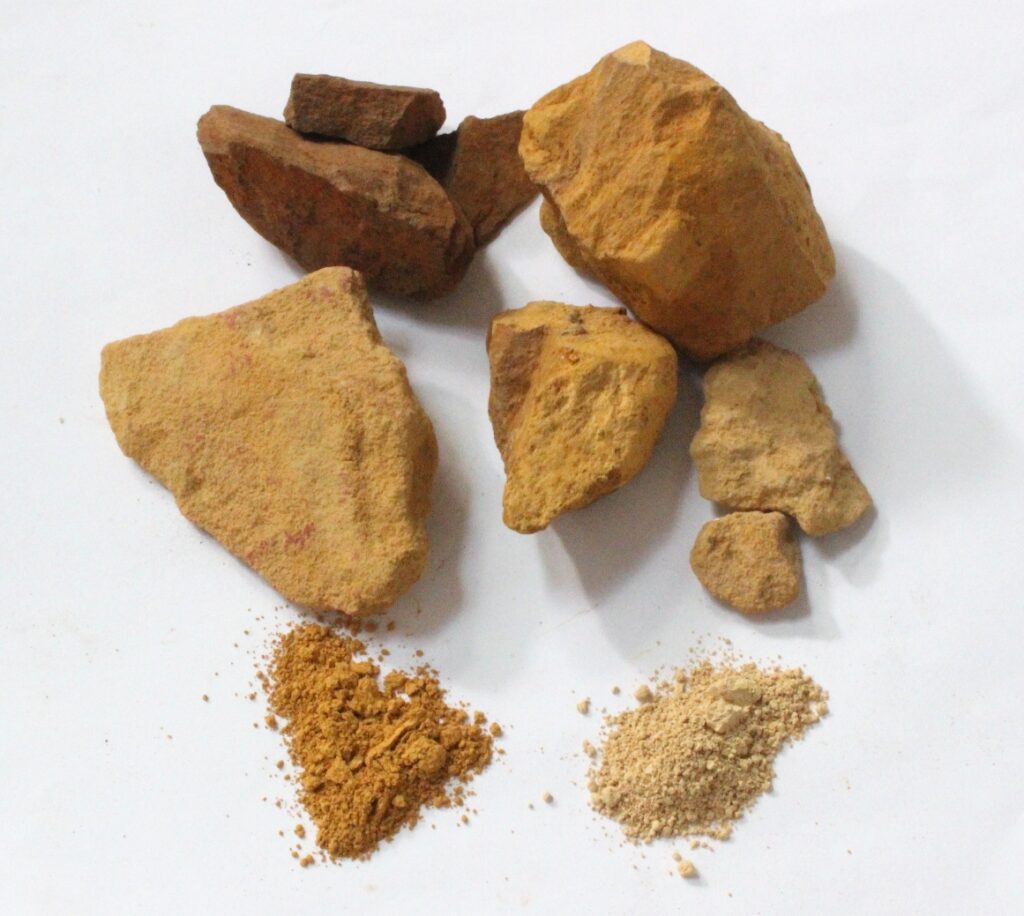
madders, cochineal red, and earth and ochre
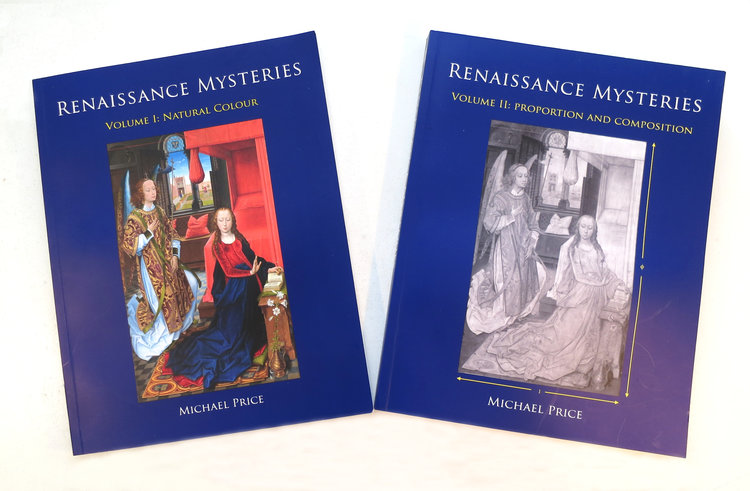
pigments. I have published three papers on mineral
pigment preparation and application since 2000. This
is the result of 16 years of studio and archival research
into the European Renaissance palette as well as
collaboration with numerous scientific institutes.
Conclusion
The human figure or the nude is a symbol for the
'ultimate concern of being and non-being'. In addition,
the association of the nude with its archetypal
antecedents lives eternally in human consciousness.
The nude is ontologically the richest of symbols, with
infinite depth, and challenges us with all its levels of
complexity. As being incorporates non-being,
(following the principle delineated in the writings of
the philosopher-theologian Paul Tillich) so the
figurative incorporates the abstract. From my point of
view, there can be no duality just as life incorporates
death. This ontological position allows my inner
vision to focus on the inherent and astonishing beauty
of nature and to transcribe my experience into a rich
and imaginative language.
David Findlay Galleries, New York City,
March 2003: from a Press Release

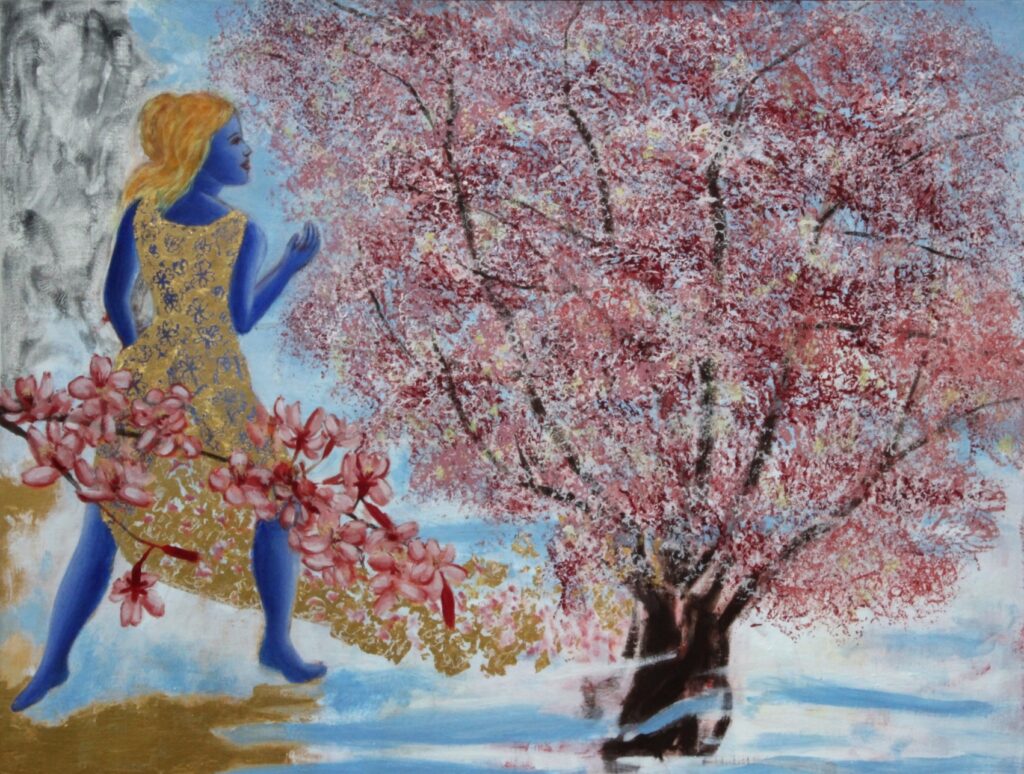
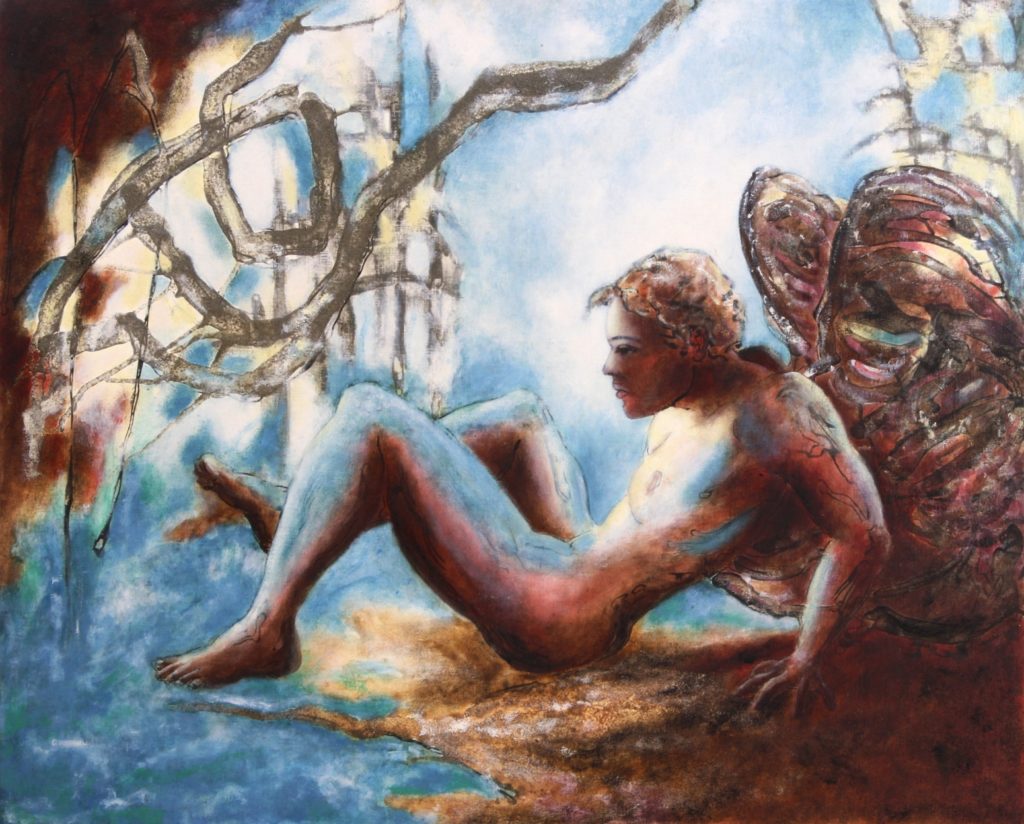
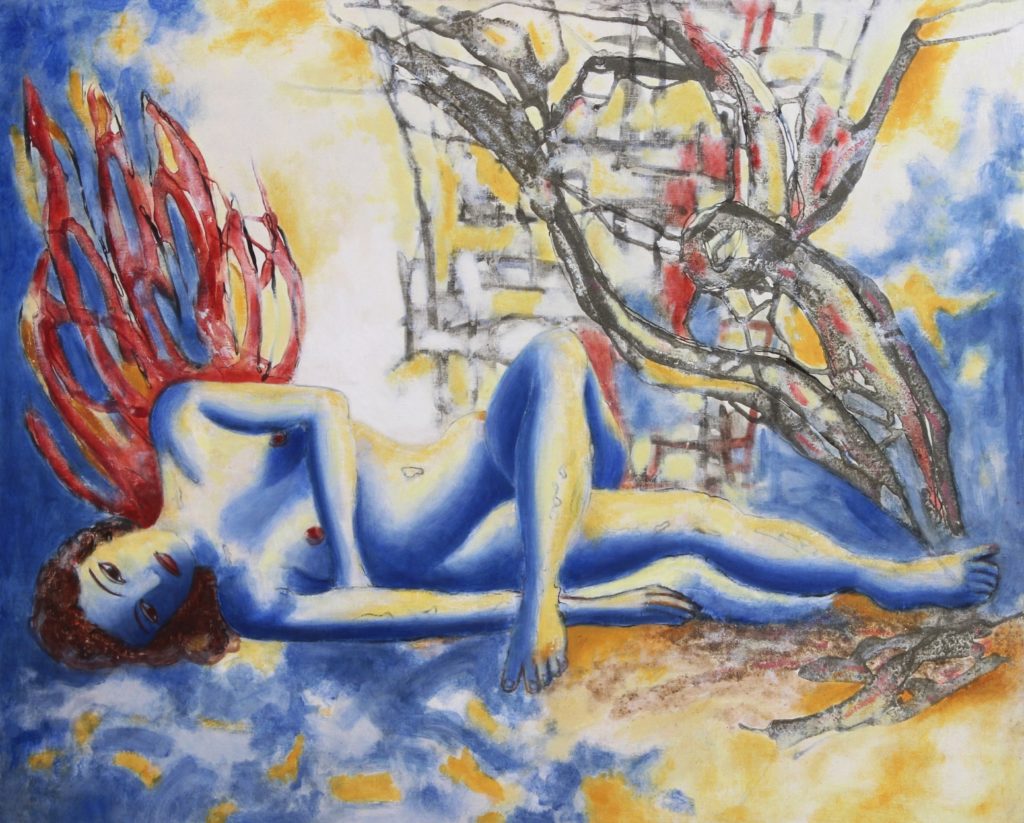
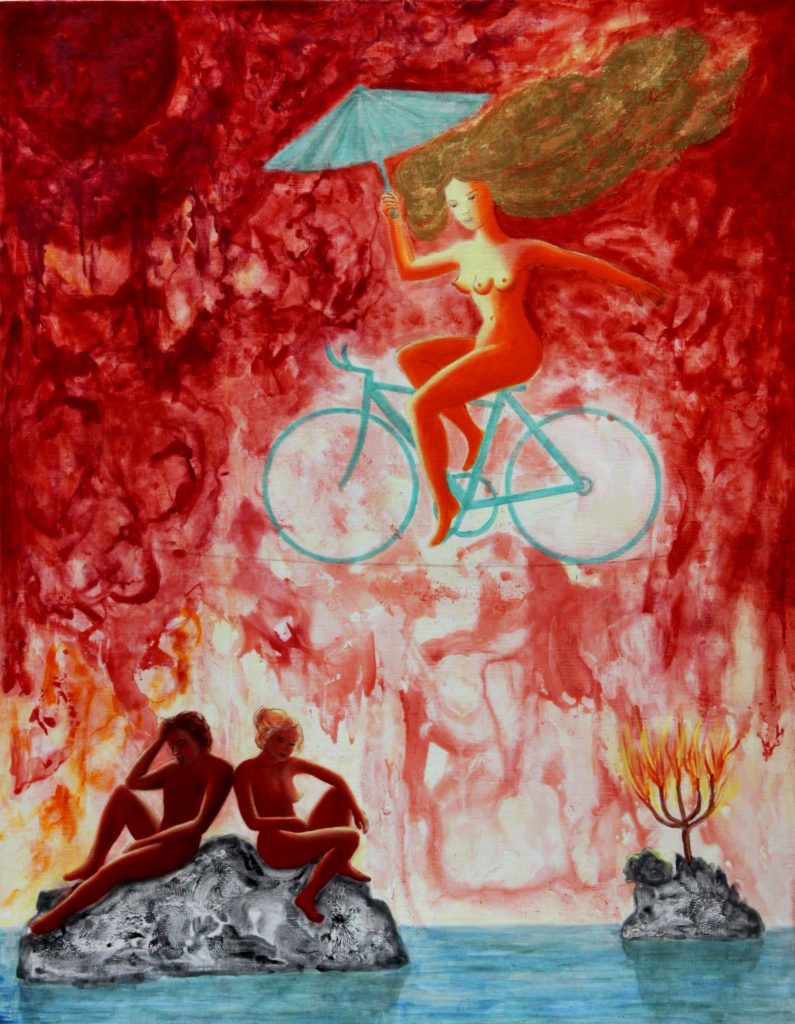
Michael Price’s paintings are bold images of nude figures
inhabiting natural landscapes. He makes no attempt to render
them in natural colors. Instead, he depicts his subjects in
primary colors that glow with an almost incandescence.

Perhaps it is Price’s brilliant palette of exaggerated color that
instills his images with an other-worldly quality. The simple
nudity of his figures also imbues them with a particular
importance and even timelessness. Throughout the course of
Western art deities have been depicted in this manner.
The Discovery of Protocols for the Use of
Natural Pigments in Oil Painting - the late
James Beck, professor of Art History,
Columbia University, New York.

Michael Price has restored and preserved for Western
culture our Renaissance tradition, that depended on artists and
their assistants grinding the semiprecious stones such as lapis
lazuli, azurite or malachite and mixing them with oils
according to propriety recipes. Time - and, from my vantage
point as an art historian, carelessness - caused the Western
culture to irretrievably lose the methods of making natural
pigments. Michael Price has single-handedly mitigated that
historic loss.

His rediscovery of the lost historic methods for preparing
mineral pigments reopens and represents this medium for
artists across the world. As a teacher and professor of Art
History to today’s young artists, I am absolutely convinced
that Michael Price’s painting and speaking presence in the
United States will signify areawakening of that tradition.
Henry Gregg Gallery, New York, July 2005:
from a Press Release

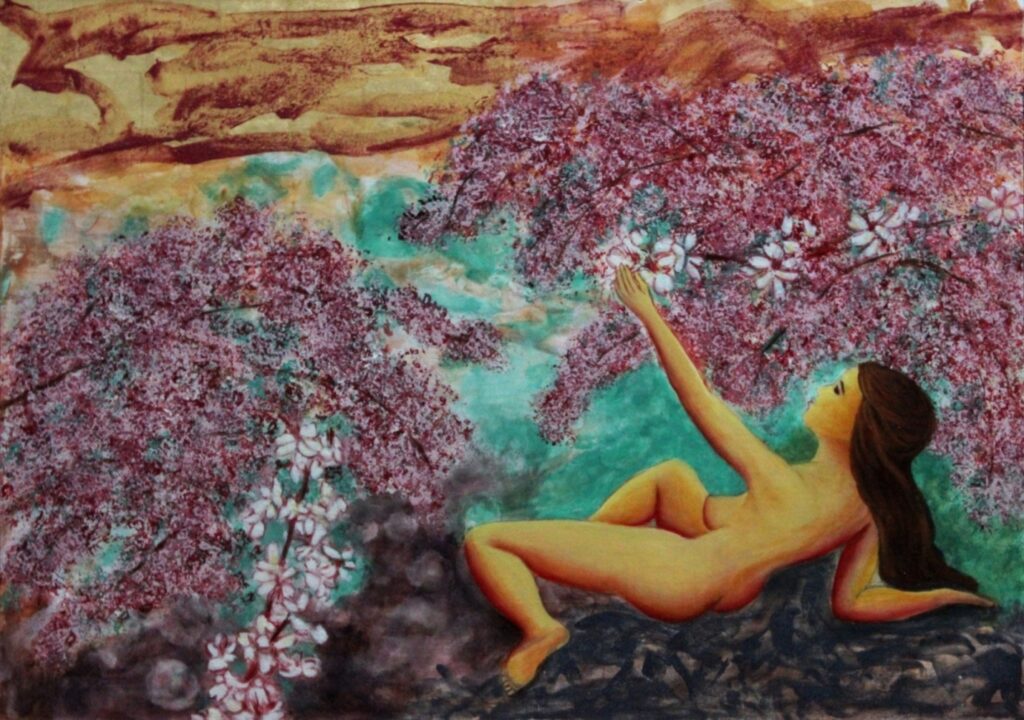
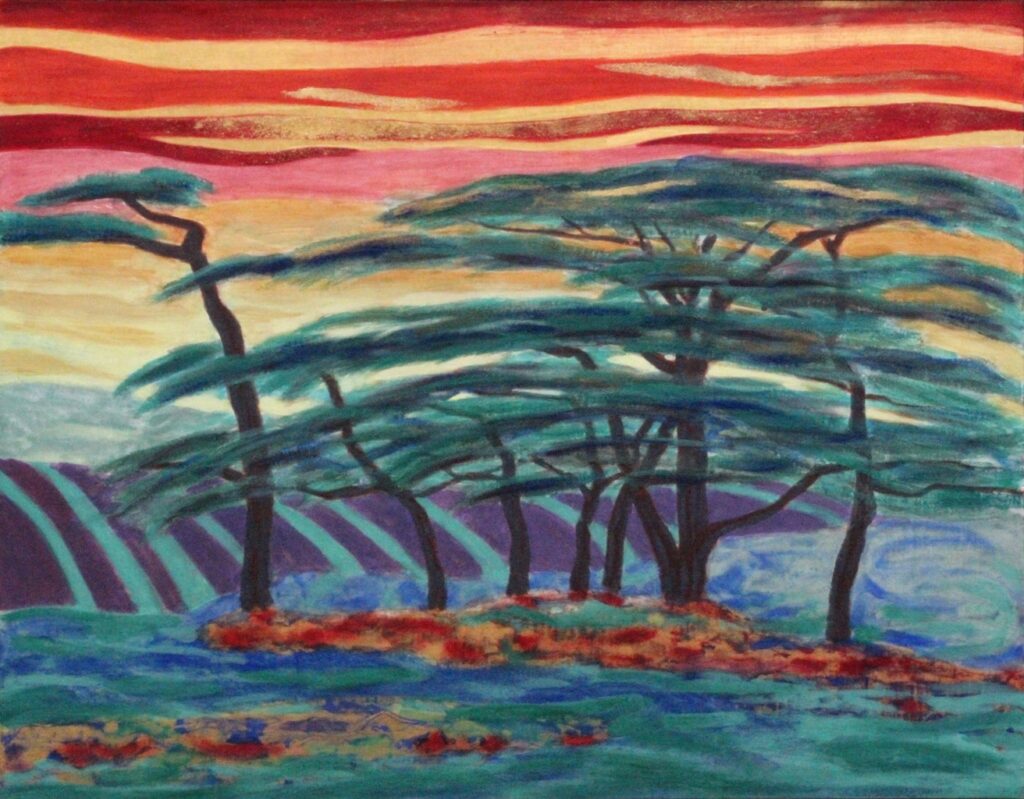
New York based British artist Michael Price presents a
hitherto unimaginable interpretation of Central Park, a park
presided over by the archetypal figure 'Venus', the symbolic
goddess of love.  The large oil paintings from the past two
years, titled 'Central Park Venus', present the artist's
development of the chromatic nude inhabiting a landscape as
an extended chromatic space. This original color concept
relies on the chroma of the different natural and mineral
pigment particle sizes to create volume or depth.  The artist
hand-grinds all his colors from rocks and crystals and prepares
them according to a variety of protocols.

Price, an expert on natural and mineral pigments, has
published his research into the pigment preparation of the
colors of the Renaissance palette in the journal
‘Leonardo’ (MIT press), and recently in ‘Artwatch UK’. This
truly luminous color transports the nudes to a transcendent
other-worldly existence although the archetype of Venus stays
firmly rooted in the transformed scenes of Central Park.

Venus reflects and amplifies the changing moods and spirit of
the park. Each chromatic nude is painted either with lapis
lazuli, azurite, malachite, cinnabar, orpiment or even a simple
natural yellow ochre collected by the artist from rock
outcrops in southern Utah. The vibrant color imbues the
nudes with a freedom, beauty and dignity seldom experienced
with this genre.
Chromatic Sequence 1
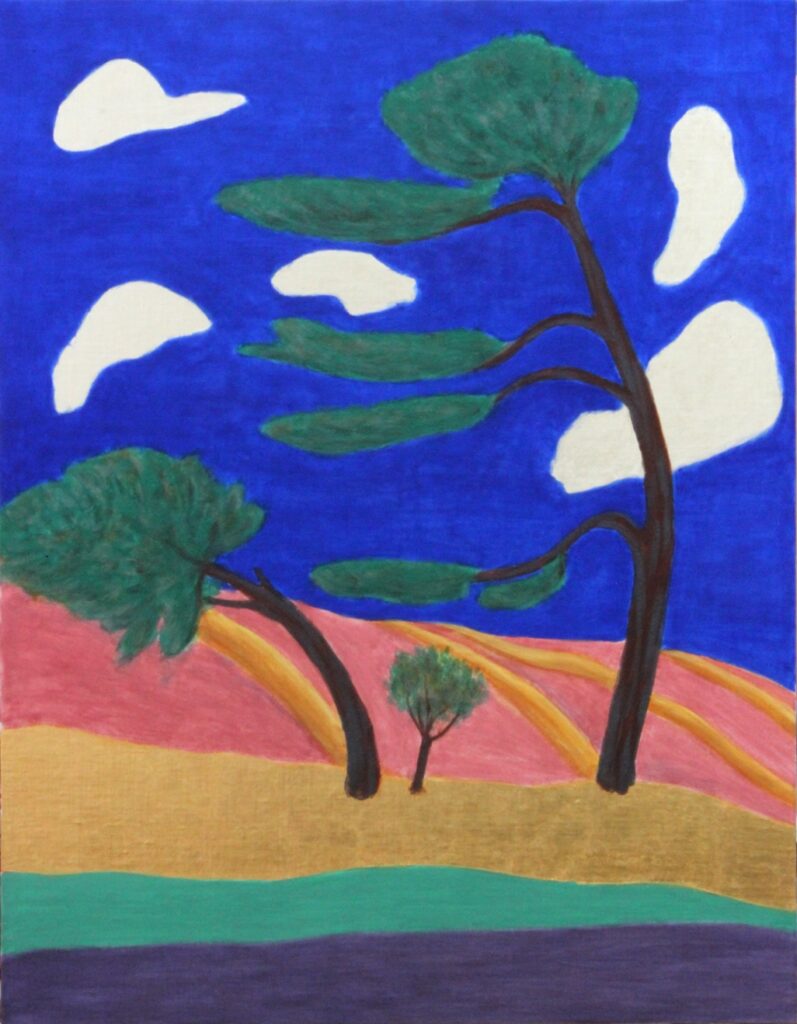
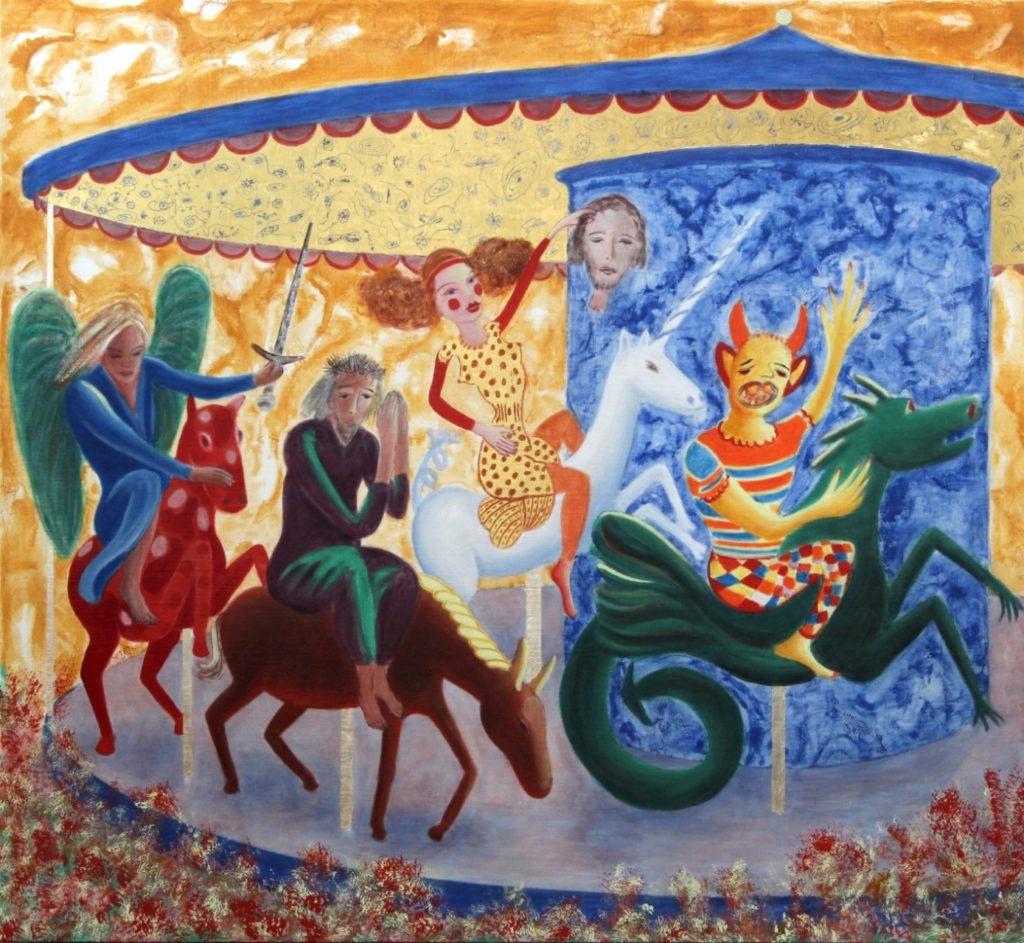
Chromatic Composition 12, Life on the Edge, natural and mineral pigments, tempera, distemper, oil, linen
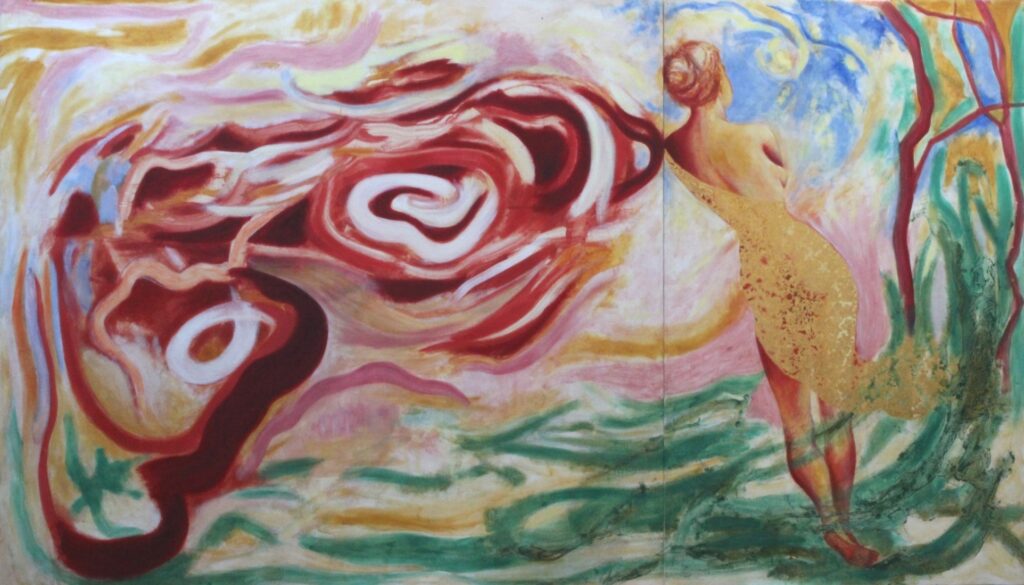
Chromatic Sequence 2, The Labyrinth, natural and mineral pigments, tempera, casein distemper, oil, linen, panel